St Louis County, Missouri - EM48sr
mel-at-melwhitten-dot-com
16Mar24 (most new content highlighted in red)
Attending Hamvention/Dayton/Xenia this year? I hope so! Pease join Mooneer, K6AQ and me at the FreeDV booth and forum sessions on Friday (TAPR) and Saturday (Digital Modes). FreeDV's "ezDV" hardware will be demonstrated in the booth.
(Please scroll down to see a picture of the ezDV)
KØPFX on-the-ar: Daytime 14.236 Digital Voice and evenings CW mostly in the extra class sub-band of 20 and 40m Also, active on VHF and UHF with an Icom 9700 and Digital 70cm ATV. My APRS mobile SSID is KØPFX-9. In the shack, I monitor 144.34 DATV Talk-Back and STL METRO talk group on DMR using a Kydera/TGIF Hot Spot and a RFinder B1 HT. Weather conditions (KØPFX-8) near my QTH via Byonics Tiny Tracker and Peet Bros Weather Station 2100 with a Kenwood TM-271 may be found here. Packet Radio is monitored with a PBBS on 145.01. KØPFX-1 STL node is still available on 4 frequencies using the Gracilis Packet Ten Switch.
Modes:
NPR - New Packet Radio...it is coming and it is fast! Actually, it is but I have slowed down. Just not made the the time to work on it. I have had it successfully working (thanks to help from NØMFC and we plan to get back on the project later this summer)... more to follow! Look here! NPR has come to a stand-still at my QTH. Need a partner to play. If you are in the Metro STL area and interested in this mode, please contact me. Spare gear is available for testing.
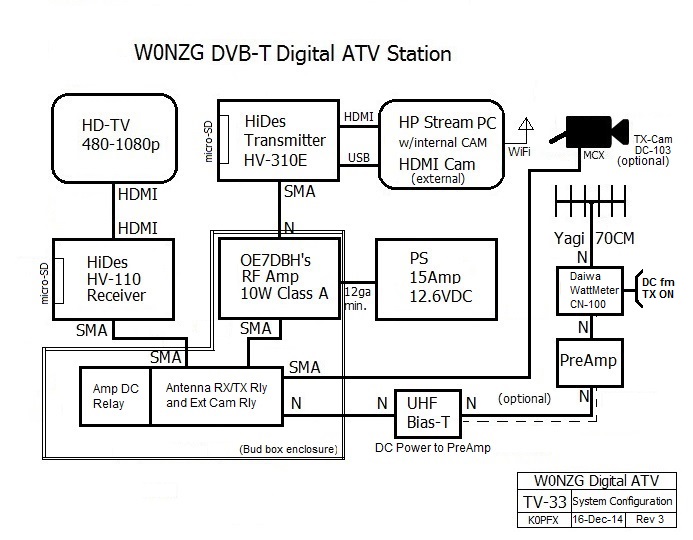
Digital ATV - Send/Receive high def Digital TV pictures (and audio) using Digital Video Broadcasting (DVB-T). This is being accomplished using HIDes gear that may be found here (and sold on eBay). To get started, all it takes is a USB tx/rx dongle (or stand-alone tx/rx), an amplifier and a 70cm yagi antenna. A small 10W Class A amp from OE7DBH works well for all HiDes TXs. I recommend Herve Benoit's book "digital television" 3rd edition (Focal Press) and Mark Massel's "digital television" which "describes and explains" much of what a ham needs-to-know to become successful in this relatively new mode for amateur radio. The mode is fun and with a lot of possibilities now that it is in HD. Small "stand-alone" Transmitters and Receivers (no PC connection required) plus HD cameras with built-in DVB-T transmitters are also available. If you live in the metro St Louis area and interested in digital ATV, please contact me and I'll be happy to help you get started. See typical RX/TX Interface to antenna and amplifiers here on this page. Please visit ATV web site, SLATS here (slatsatn.net). Website has a "For Sale" tab now with member's-only items but available for purchase from anyone. W0ATN Digital ATV Repeater description on web site also. I still have a couple "turn-key" systems available for sale that require only your 70cm antenna to put you on Digital ATV (similar to pictures below).
Sept 2023: WØATN/R Digital ATV Repeater - Updates continue on the SLATS UHF all digital ATV repeater. IP up streaming of the repeater's receiver is working now and down streaming of the transmitter is planned for later in 2024 all in high def full motion 1080p. Visit SLATS repeater web site for progress on the repeater, newsletters, for sale items, and more. (slatsatn.net) A "new" New-tronic's Spirit vertical was installed in August '23 replacing the Diamond vertical. Wow! What a difference.. signal improvement from 6 to 9 dB is being reported by the users.
New for 2024: Inovato's "HamClock" was recently added for easy access by the repeater user. I run one in my hamshack also. You may find it of interest for your shack too as it provides a wealth of real time ham activity information world wide.
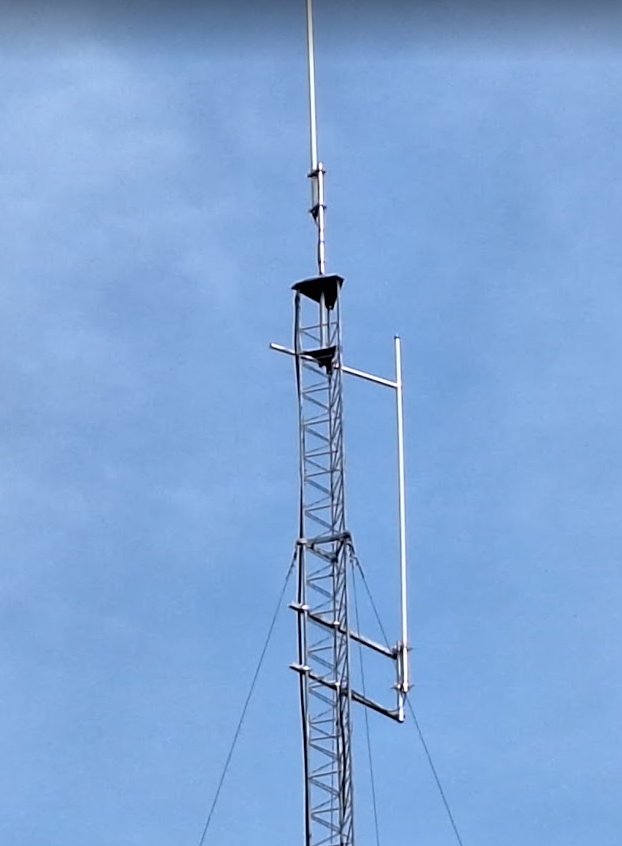
WØATN/R Digital ATV Repeater Rx and Tx New-tronic's Spirit Antennas
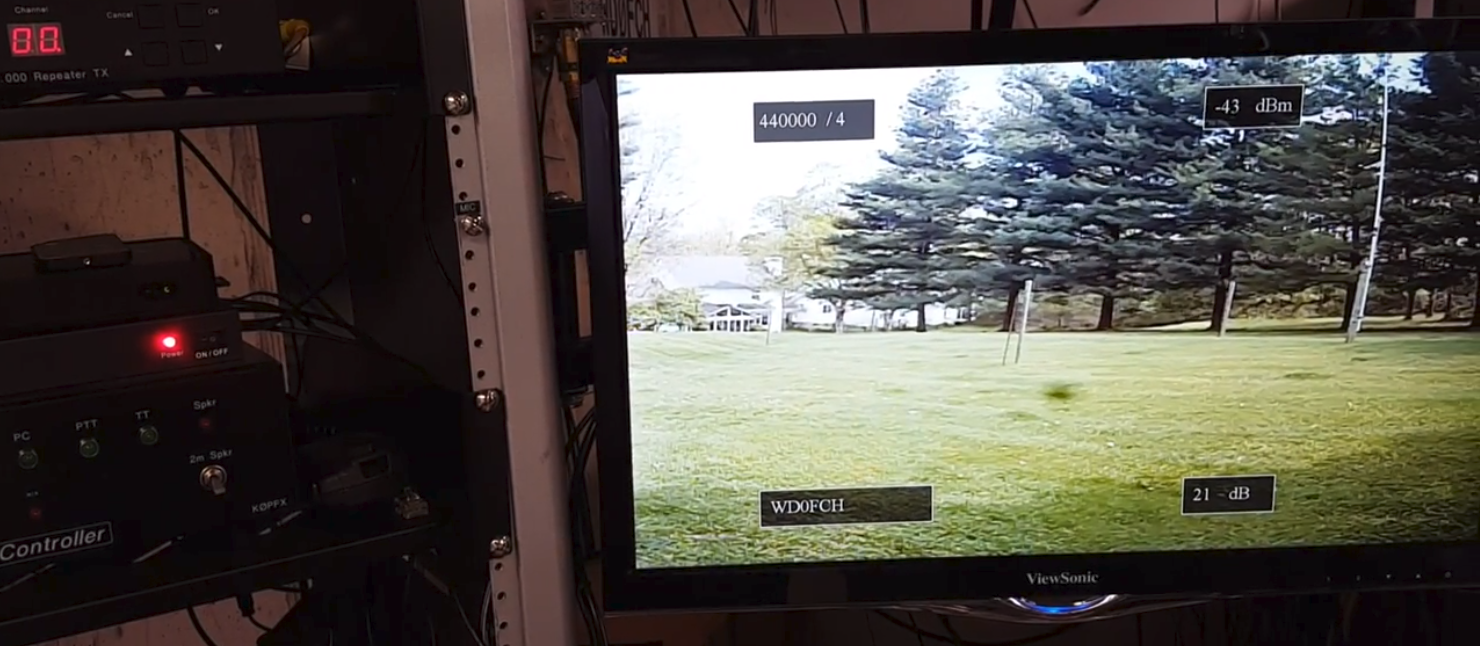
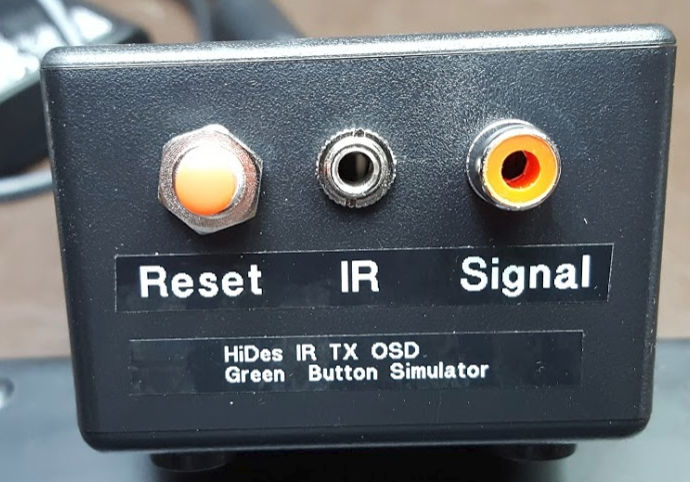
A second DTMF decoder and programming encoder has been installed in the repeater. This allows the user to turn on (or off) the HIDes signal reception SNR and signal strength in dBm ("four" corners data) as well as the full overlay with transmitter and receive bit rate error data. The TT control simulates "pushing the green button" on the repeater's receiver remote. A simple Touchtone command is used to turn the overlays off and on. Three additional commands are reserved for future control functions such as record and playback user's live video/audio.
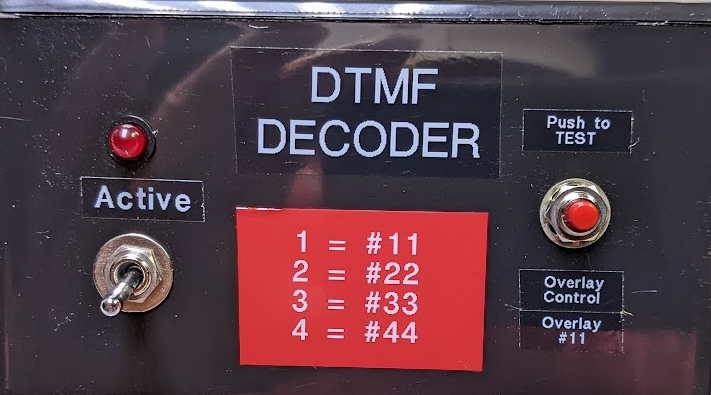
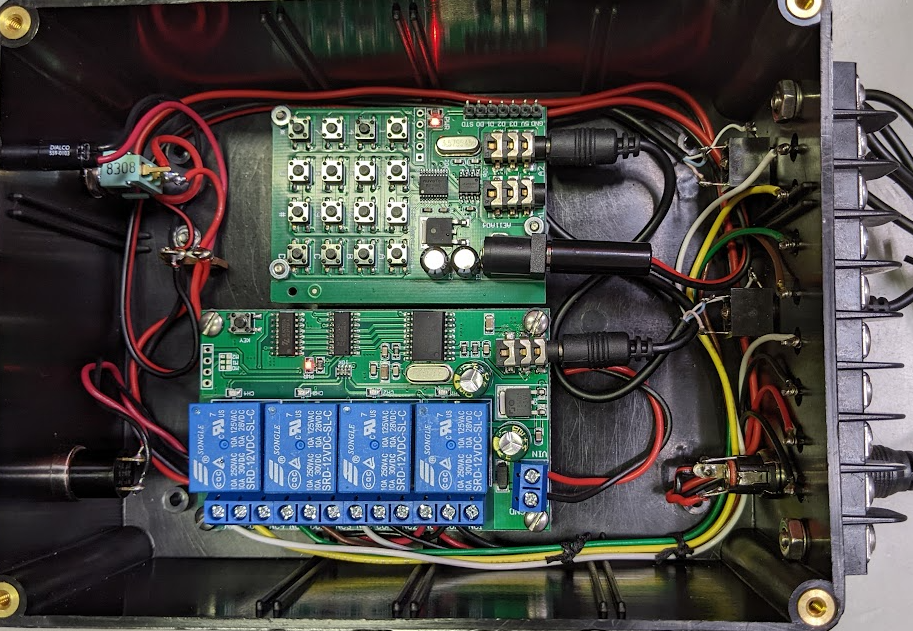
The encoder keyboard for programming is the top PCB and the lower PCB is the decoder with its 4 SPDT relays. PCBs from Amazon/eBay
Recommend Digital ATV Reading: I am wearing the covers off of Walter Fischer's "Digital Television - A Practical Guide for Engineers." books. I highly recommend this book from Rohde & Schwarz if you have any interest in DVB DATV. This is a very good reference book and an excellent guide for all modes of digital television. Out of publication, but may be found through Bing/Google searches.
BlackMagicDesign: A new HDMI switcher and recorder from BlackMagicDesign. Model ATEM Mini Pro switcher and HyperDeck Mini Studio recorder and been integrated into the Digital ATV station now. The switcher provides several functions in hardware including live streaming that requires no connection to a PC. In addition, a BlackMagicDesign Streaming Bridge has been added along with Bloggers cam, a SONY model ZV-1. In the picture of my ATV station, you will see a16 Port Testmart HDMI switch that switches ports even faster when connected to the BlackMagicDesign ATEM mini. This switch has been updated for 4k (mine is "only" 1080p) so the new one should be even better. See a one minute video of the new gear here.
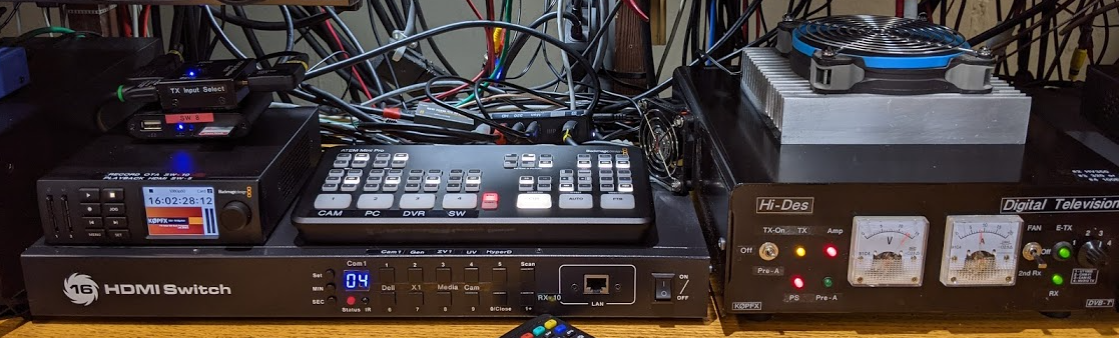
Black Magic Design's ATEM Mini Pro HDMI switcher and HyperDeck Studio Mini Recorder.
For DVB-T equipment, see the HiDes Technologies web site here and their eBay store here.
A introductory DVB-T Amateur Digital Television presentation was given at a ARRL/TAPR Digital Communications Conference (DCC). The 52min presentation may be found here.

St Louis Amateur Television Society (SLATS) was formed in 2019. Please visit our web site here for info on our Repeater, Digital ATV and club activities.
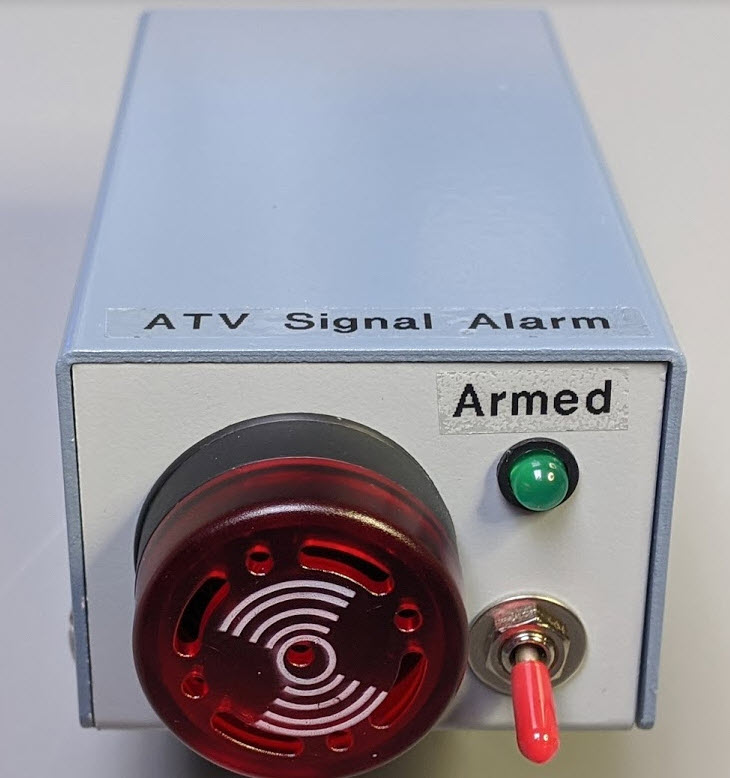
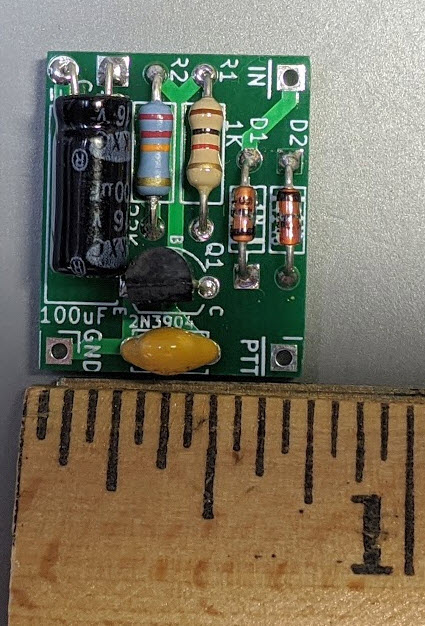
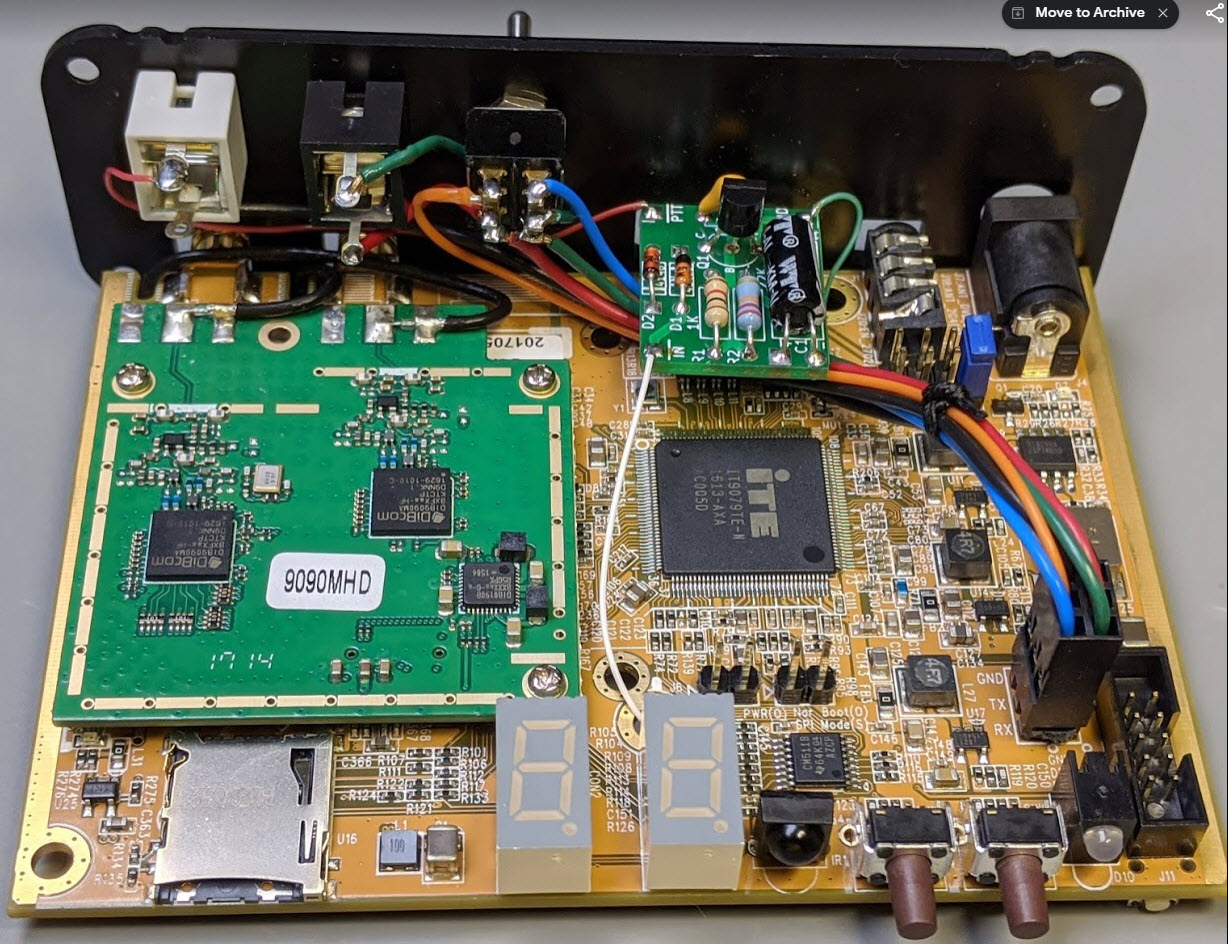
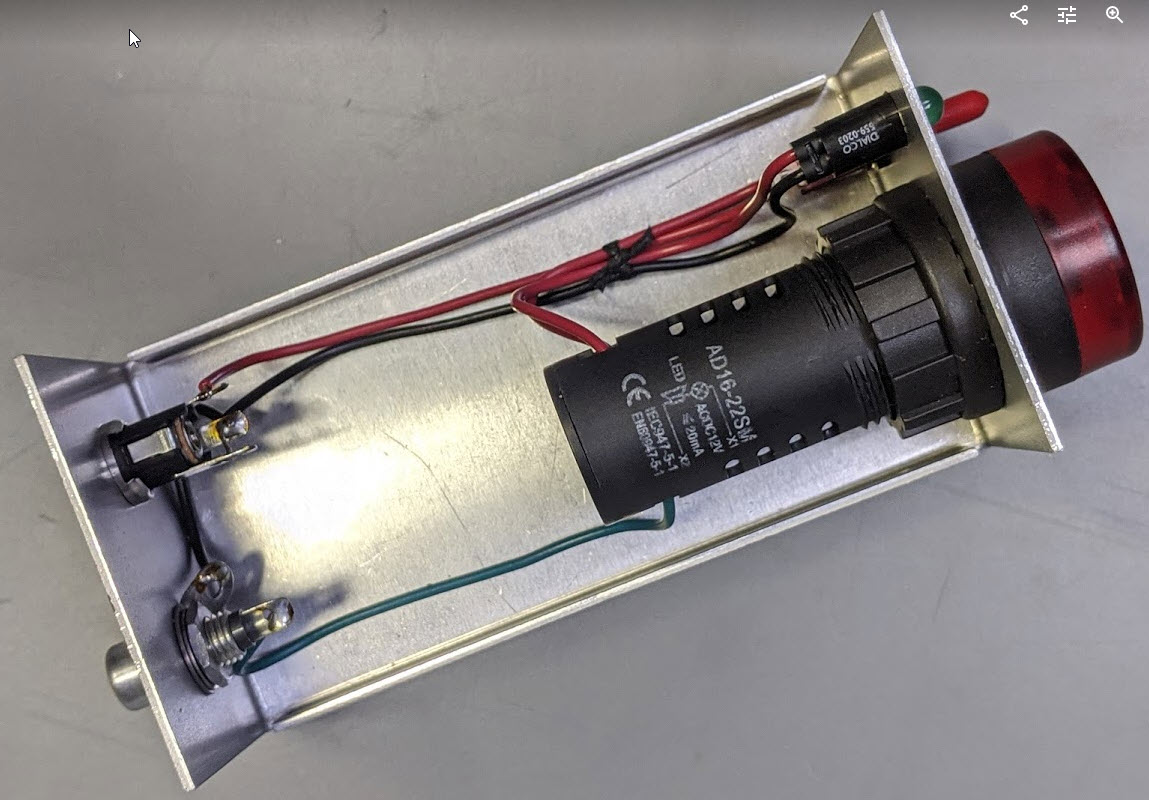
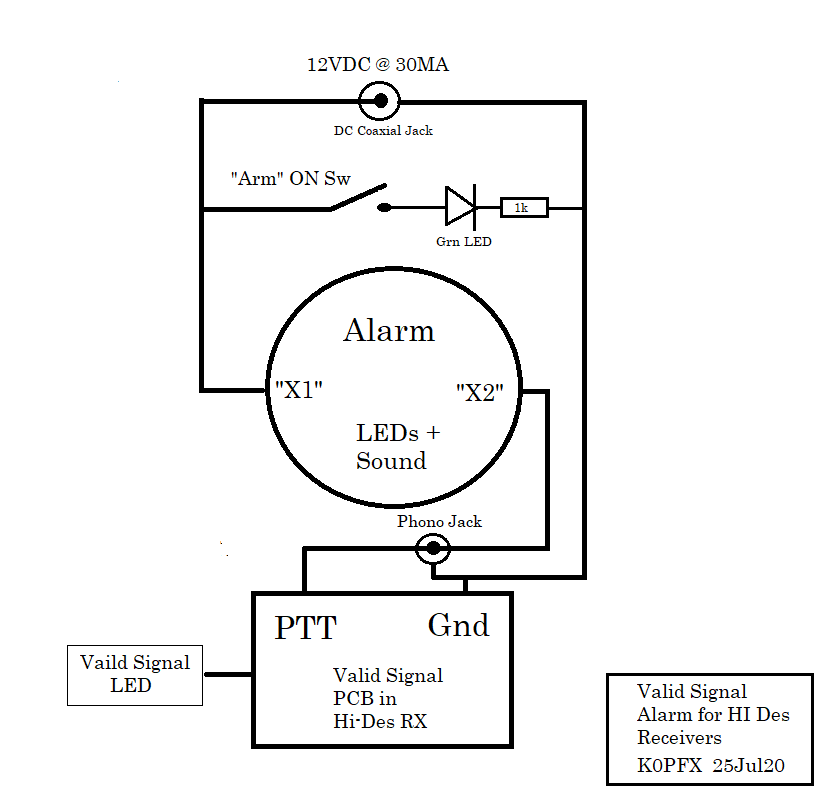
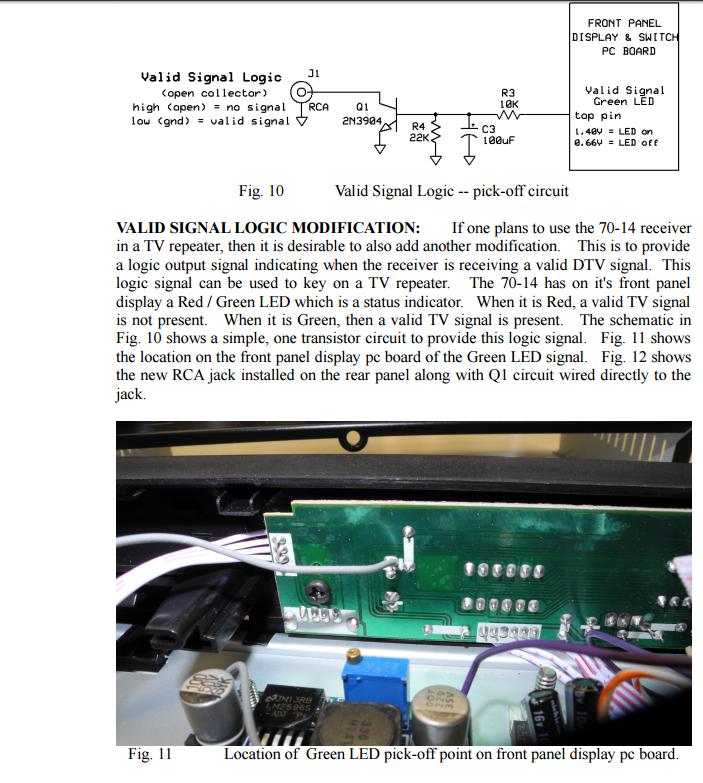
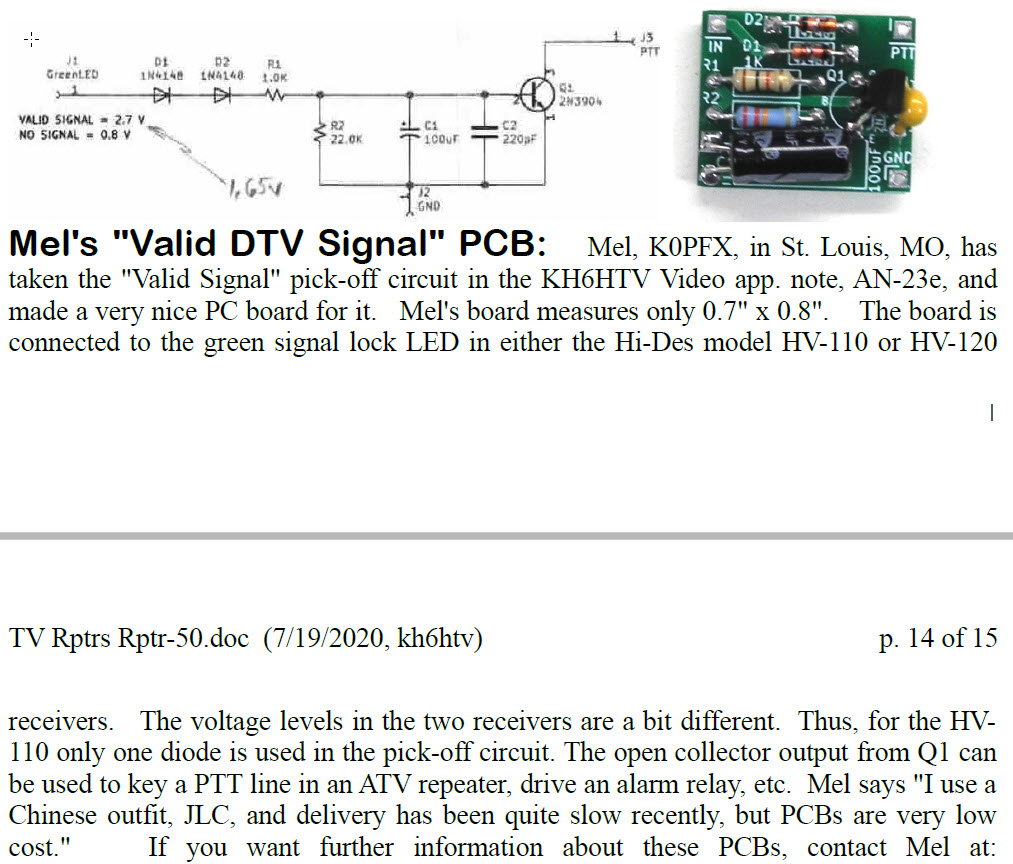
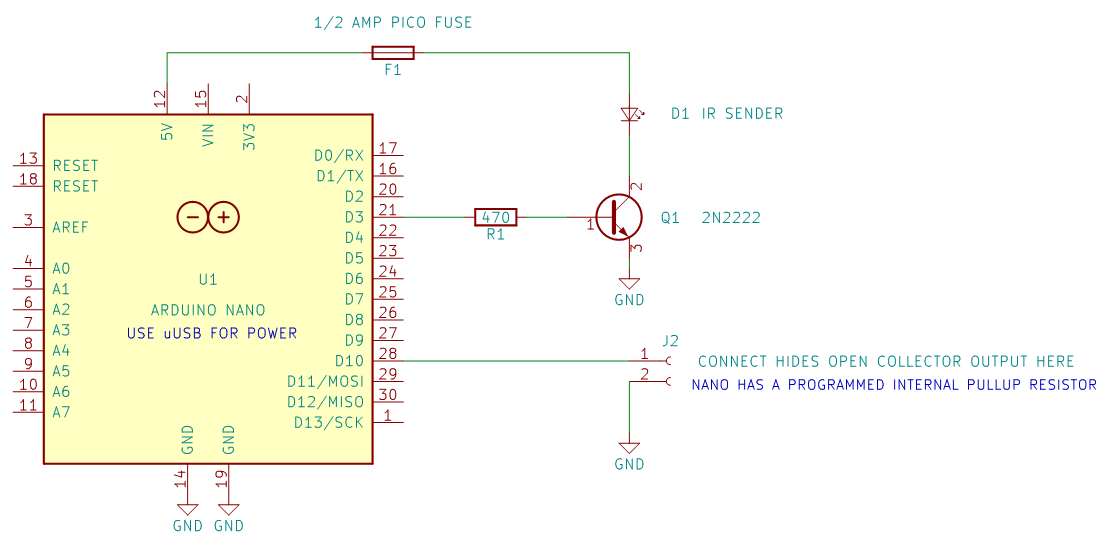
Valid ATV Signal Alarm uses logic in the HIDes Receivers (HV-110/120/122) to trigger an alarm using it's "Green" valid signal LED. A PCB (available from KØPFX) is added inside the HIDes receiver that provides an open collector to turn on the alarm to let you know someone is on the frequency being monitored. The very low cost alarm itself may be found on eBay or Amazon. Here is a diagram of the alarm. See the articles on the use of the alarm here and here.
Digital Television Repeater - SLATS WØATN ATV DVB-T 70cm repeater has added a new antenna and DCI band pass filters. The repeater uses a HIDes transmitter HV-200EH and HV-110 Receiver with a Class A amplifier. A four port remote controlled HDMI switch selects the Receiver, an enhanced Media Player, Unbuntu OS PC (not shown), and Tower cam. The repeater is located at the QTH of WDØFCH serving the NW metro St Louis area.
Coming in 2024 from HiDes: New modulator/transmitter model HV-380 with a SDI interface. SDI is commonly used in broadcasting and professional applications (commonly used with BlackMagic's ATEMs) and can carry very high speed video long distances (HDMI is generally limited to 50ft without repeaters). This may provide network options for hams not previously available. Time will tell..
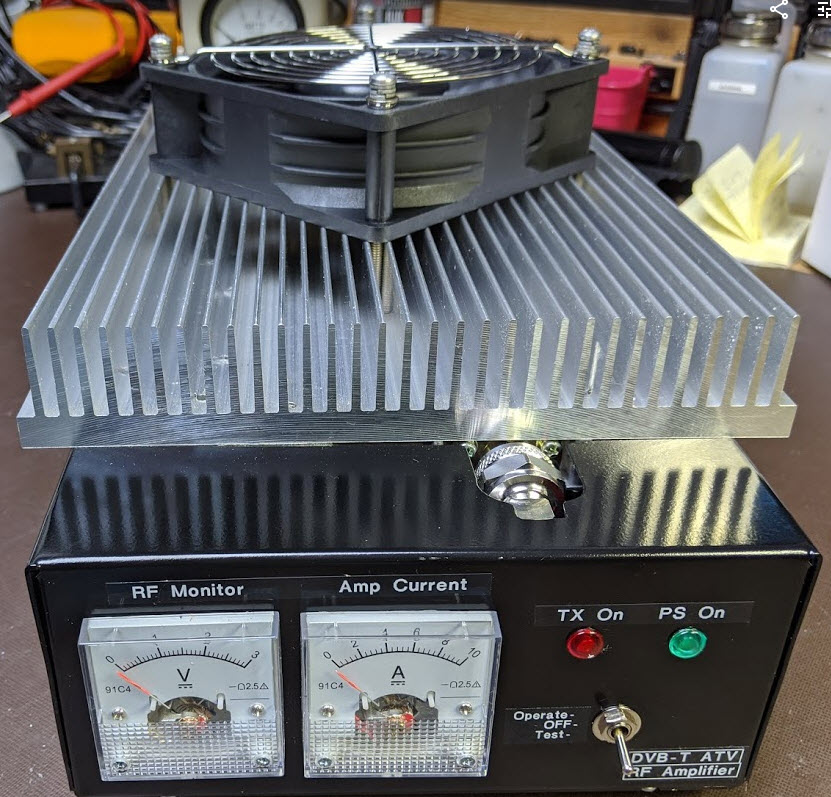
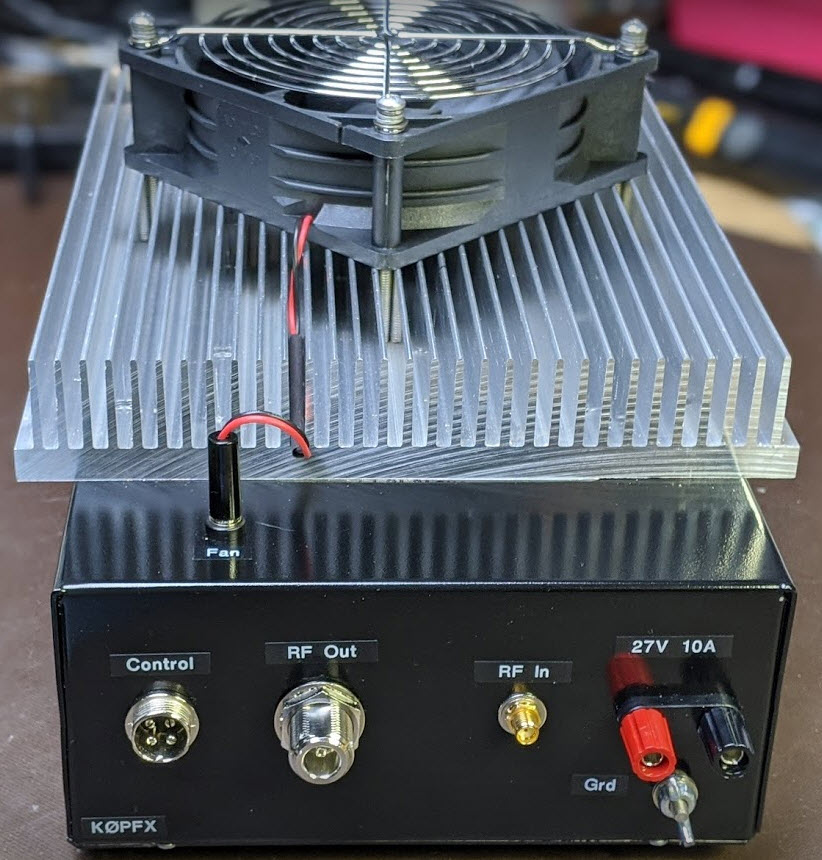
Three stage 70cm Amplifier for Digital ATV was recently completed. Compatible with HIDes DVB-T modulators. Loafs at 40w with 3.5dBm drive 24/7. Draws 5 Amps using 27 VDC supply and includes an on board attenuator and VSWR Isolator.
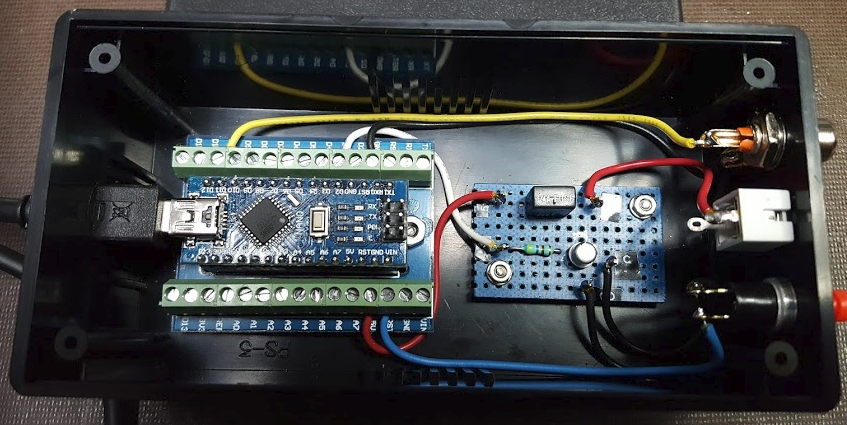
DATV Repeater: Hardware has been added to allow the user's input signal information including transmission parameters to be viewed. This information includes Signal strength, Quality and SNR. DVB-T's Forward Error Correction info (i.e. Bit Error Rate, Packet loss, etc) and transmission (TPS) parameters (BW, Constellation, Audio sync, etc) are also provided. If the user does not have full duplex capability to receive the repeater while transmitting, then then it may be streamed to his station over the internet and "played back" in real time using the VLC media player. The user can select one of two screens providing different levels of signal info by simply cycling his transmitter off/on to select the desired OSD display. Control of the display uses a Ardrino Nano processor.
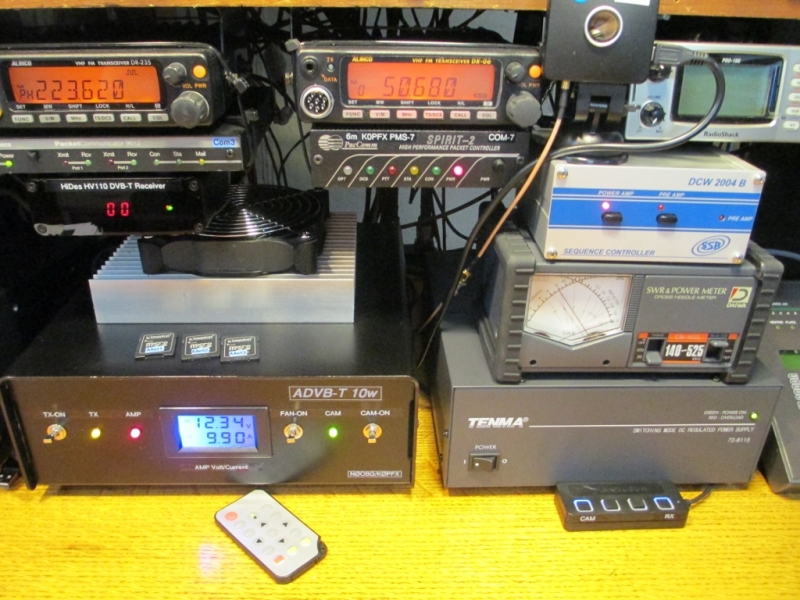
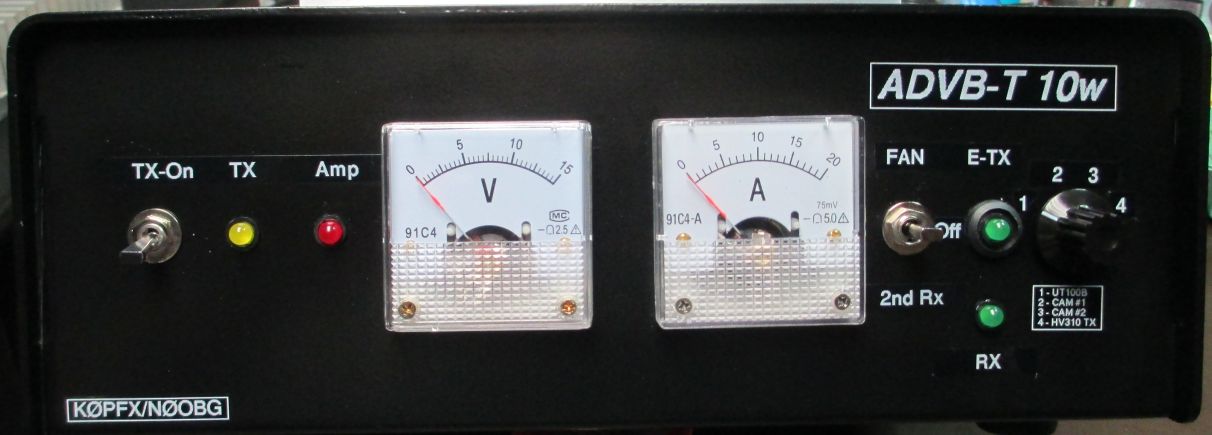
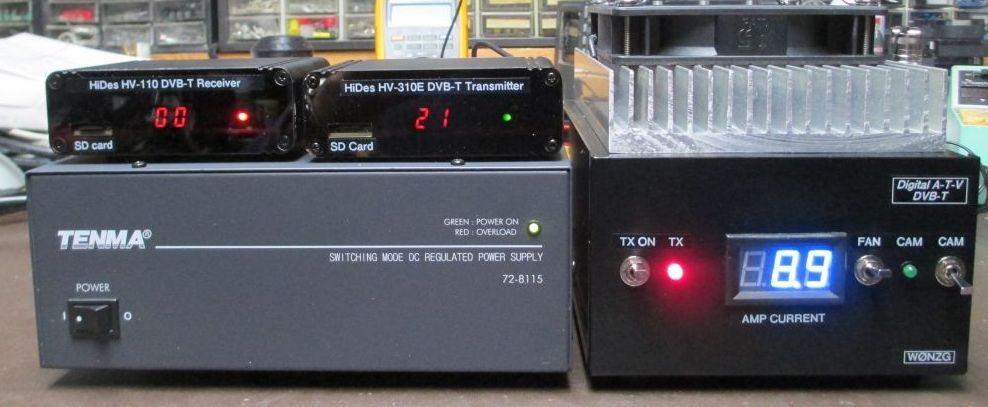
DVB-T System "on-the-air!" The "DVB-T 10w" has been completed and tested. A picture of DVB-T station using HiDes components may be seen here. The front panel and inside view of S/N 02 may be seen here and here.
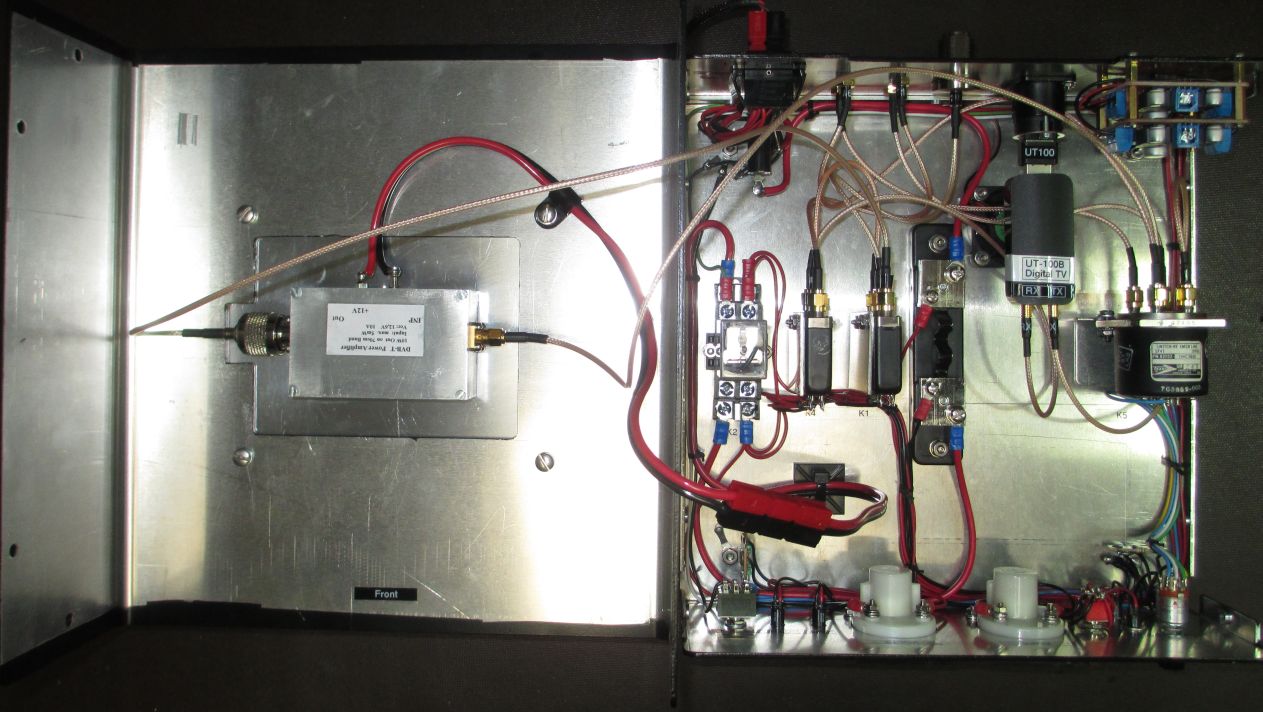
A second DVB-T 10w digital ATV transceiver is on-the-air with an option for up to 3 external DVB-T transmitter inputs. I am using a Transco 4PST switch for the HiDes Camera/TX modulators, the a HV-310E stand-alone-DVB-T transmitter and the UT-100B internal tx/rx to connect with the 10w Class A internal amplifier.
Work has completed on a HiDes DVB-T interface for W0NZG. Some pictures may be seen here, here and here.
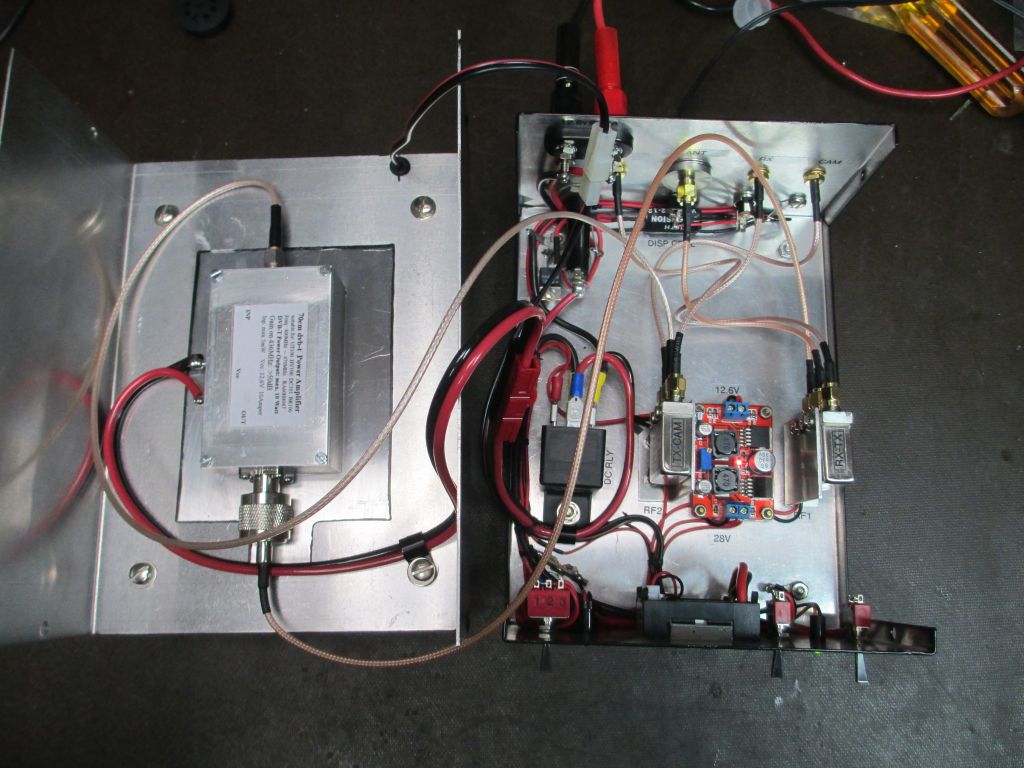
Yet-Another-Controller-Interface for the HiDes transmitters/receivers. This one was made for use with an external Class A RF amplifier from Jim Andrews found here at kh6htv.com. Another one is uses Darko's latest amplifier and heat sink with current monitoring. It includes a couple new PCBs developed to protect the RF relay contacts (delays switch back to receiver until the HiDes transmitter has stopped transmitting). The other PCB replaces the 9vdc battery and provides isolated power for the DC digital Amp meter (12v in/out isolated from the DC power supply for the amplifier). A total of 15 Interface controllers have been built for DVB-T. S/N 14 was built for KE0VYE, Vince who received it in late June 2023. Since 2019, sixteen (16) DVB-T interfaces with Class A amps have been built for digital ATV service.
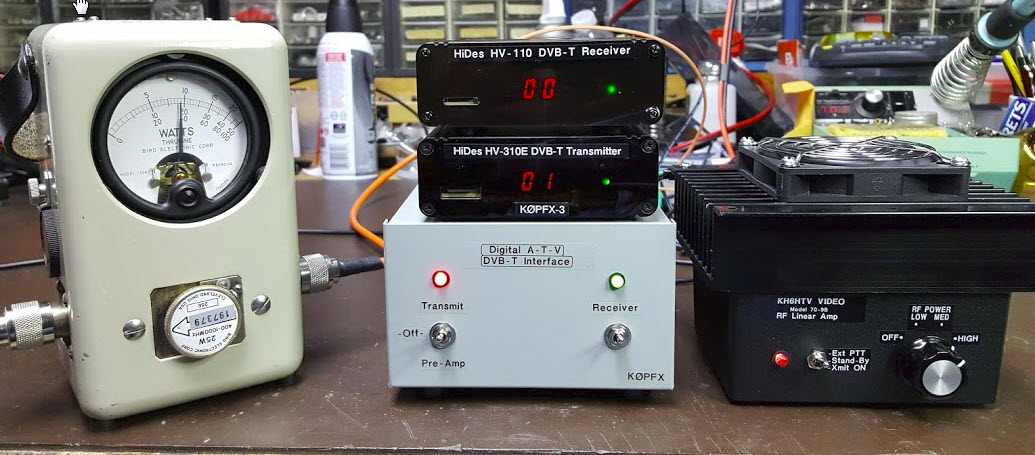
On the bench...Running 10watts with external amp design from Jim, KH6HTV (purchased by Andy, KA5BBC)
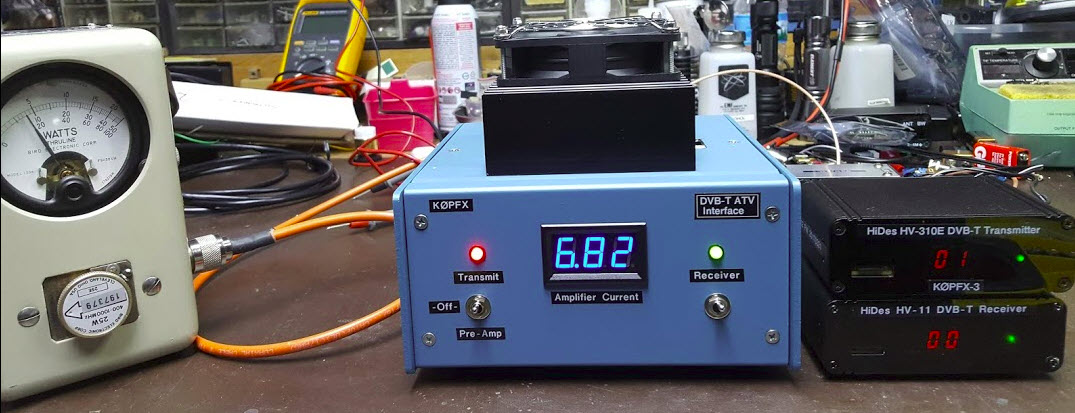
DVB-T Interface with Darko's 10w Class A RF Amplifier design (purchased by Tom, N8ZM)
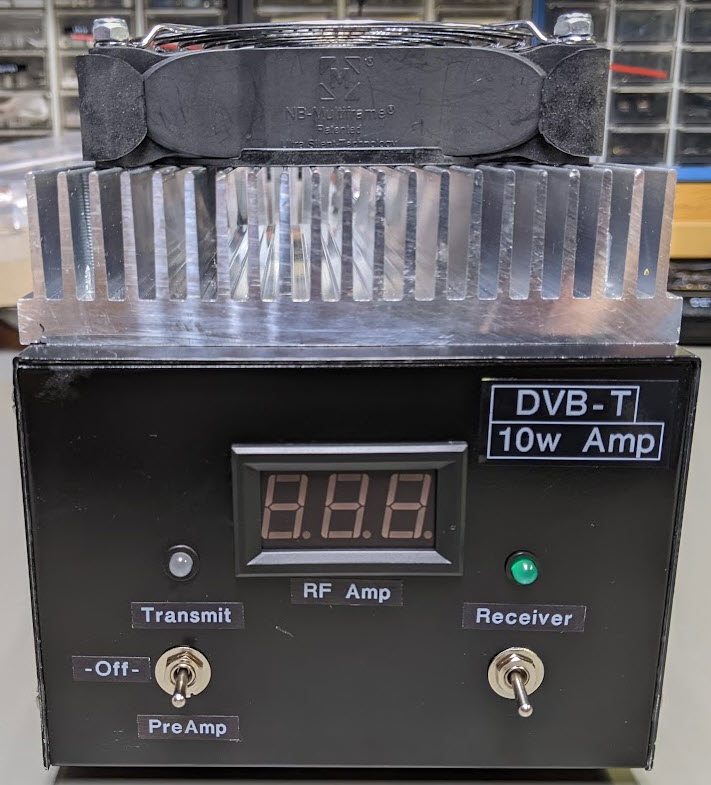
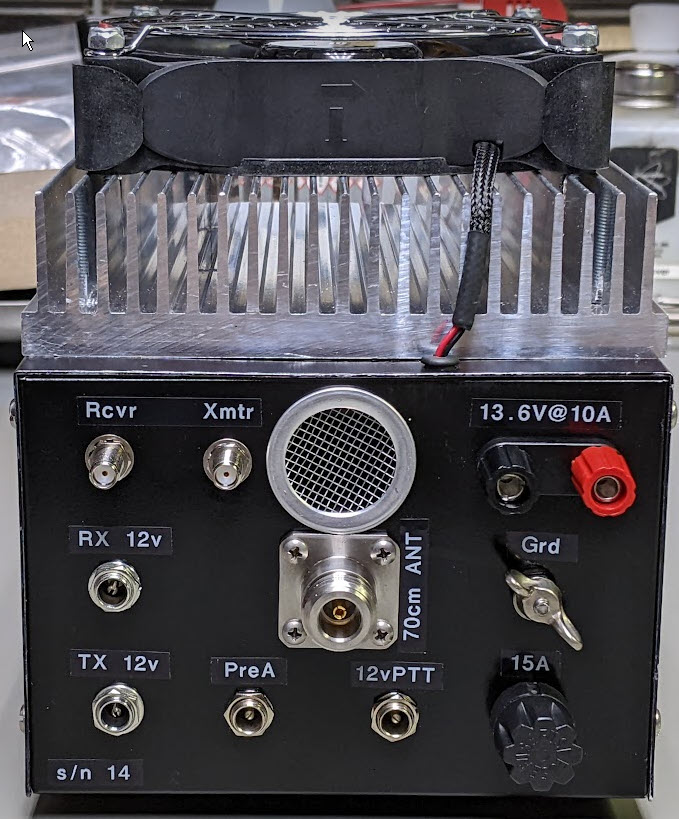
DVB-T 10w Class A amplifier with antenna relay and DC power control for Hi-Des transmitters/receivers
Documentation is available for construction of this DVB-T 10w amplifier HIDes interface
For detailed docs on "Home Brewing your ATV Interface," read the Flipbook found here
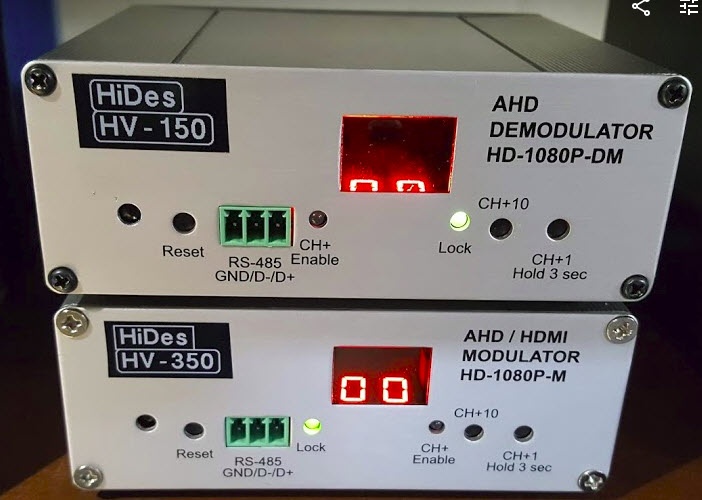
New...HiDes's AHD and TVI-HD TX and RX allowing use of low-cost 1920x1080p coax/BNC cameras for D-ATV
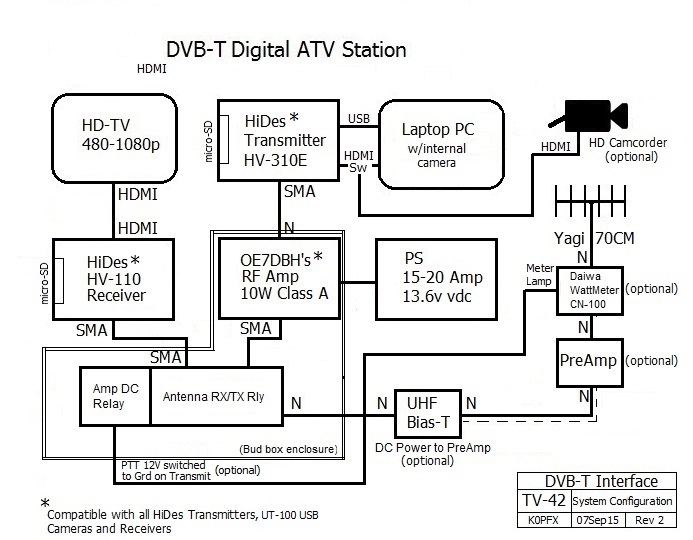
Typical digital ATV station. Lot of options with HDMI content...choose an HDMI switch with extra ports!
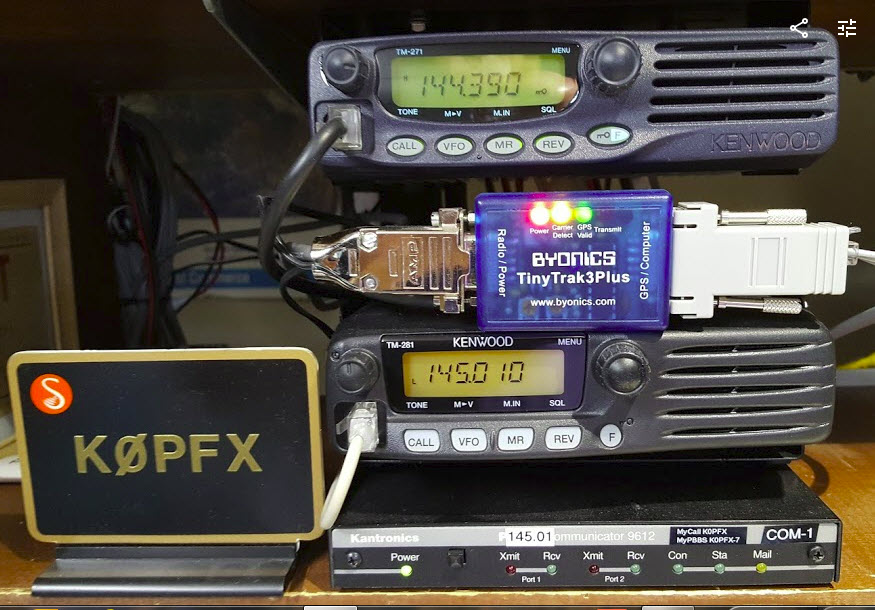
Weather Conditions K0PFX-8 and Packet PBBS K0PFX-7
FreeDV Digital Voice: A replacement for FDMDV was released in beta on December 7, 2012 and has enjoyed wide acceptance from both old and new users of this technology. FreeDV with its new open source coder/decoder (CODEC2) provides good voice quality at a very low bit rate in one half the frequency spectrum of conventional SSB. Written and video documentation is available to help the new user quickly get on the air. The program may be downloaded at FreeDV.org Windows, Apple and Linux distributions are available. Digital Voice on HF has now been in development for over 20 years.. It is one of the most difficult modes to develop a robust narrow spectrum BW modem while meeting all user's voice quality "expectations." HF propagation is a very poor "wire." An ARDC grant was recently received (2023) is being used for improving the robustness and voice quality of FreeDV. Stay tuned... much more is coming.
FreeDV CODEC2 and Modem development: This very low bit rate Speech Codec and a robust modems are continuing to be developed by David Rowe, VK5DGR and the open source community. David's work is well documented in his blog at rowetel.com. His work may be found here In addition, Mooneer Salem, K6AQ has made a number of improvements including auto receive mode decoding, PSK Reporting, more radio sound card and PTT interface support for easier configuration, additional SM1000 modes and Flex Radio SmartSDR update option for current FreeDV release.
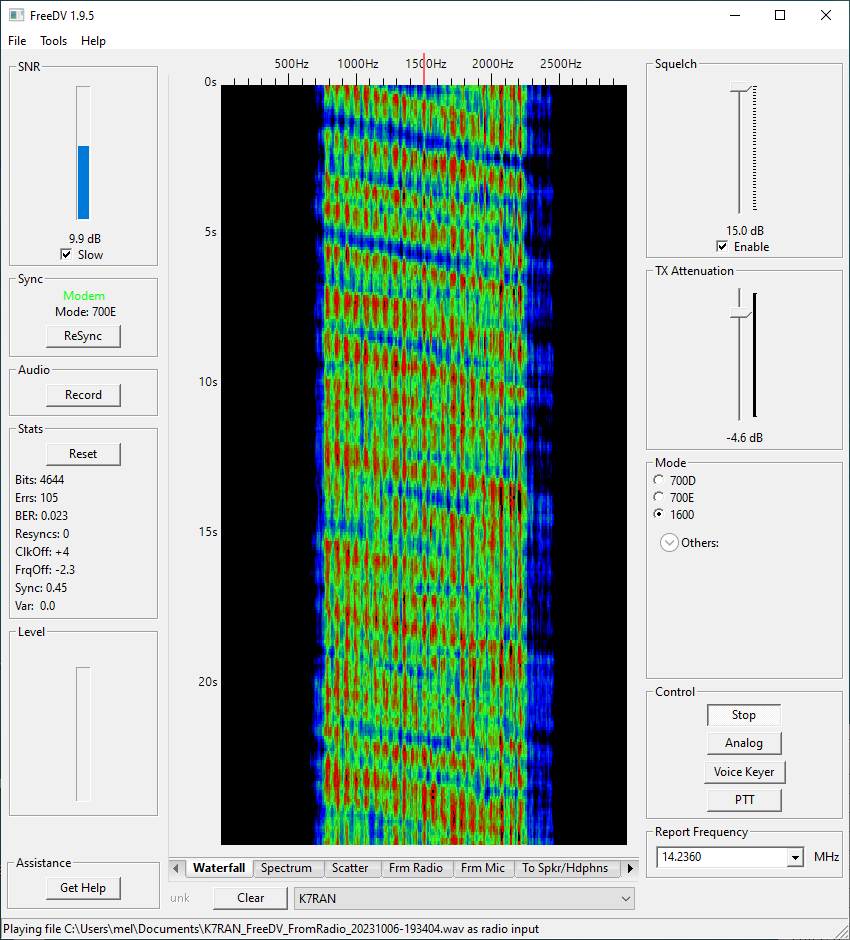
Find the latest version at freedv.org
FreeDV QSO Finder has been updated and is now the "FreeDV Reporter" with many new features! Find it here. Current stations on the air, including their frequency and if they are listening or transmitting. Login to the "chat" page with your call sign. First look for activity on 14.236USB. Several stations monitoring this one daily.
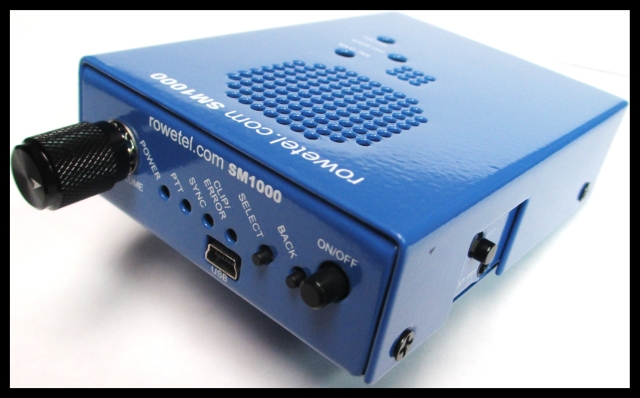
FreeDV SM1000 Digital Voice adapter for SSB Rigs: No PC required. Just plug into the microphone of your SSB radio and the squeeze the PTT for instant digital voice. Available now. For more information, see David Rowe, VK5DGR's blog here. SM1000 has a change of color (now black with white nomenclature) and includes new firmware for 700D, 700E and 1600 modes Version 5. New: Now shipping! I have received two from the new production (2023). FInd them at www.dragino.com It is black in color and cost $195/US + shipping.
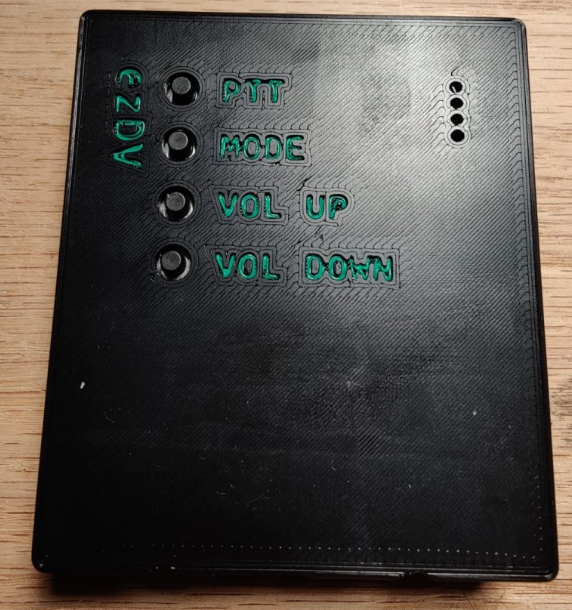
New for 2024 FreeDV's ezDV: Powered by an ESP32-3 microcontroller, this portable handheld device supports a completely wireless setup for supported radios along with enabling more modern functionality with FreeDV Reporting. For further description and specs, find it all at freedv.org. Tucson Amateur Radio (TAPR) should have it available at their store by and/or before 2nd quarter '24, so look for it there.
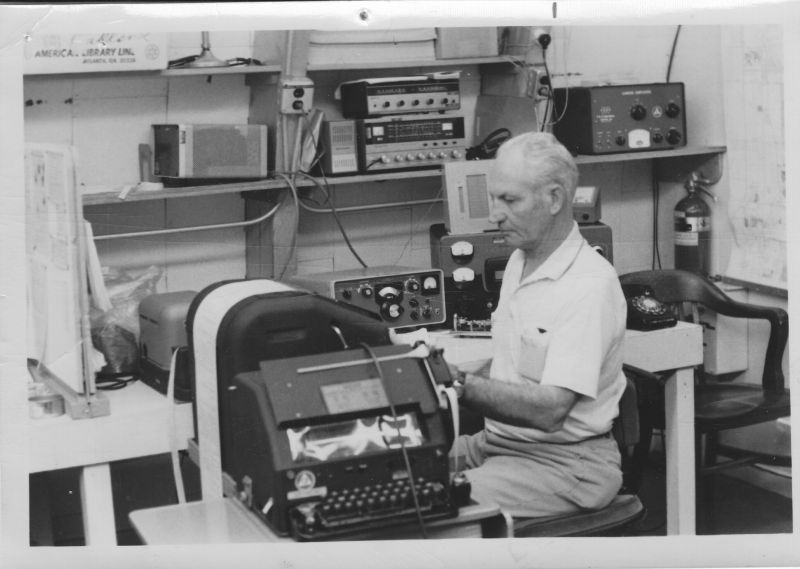
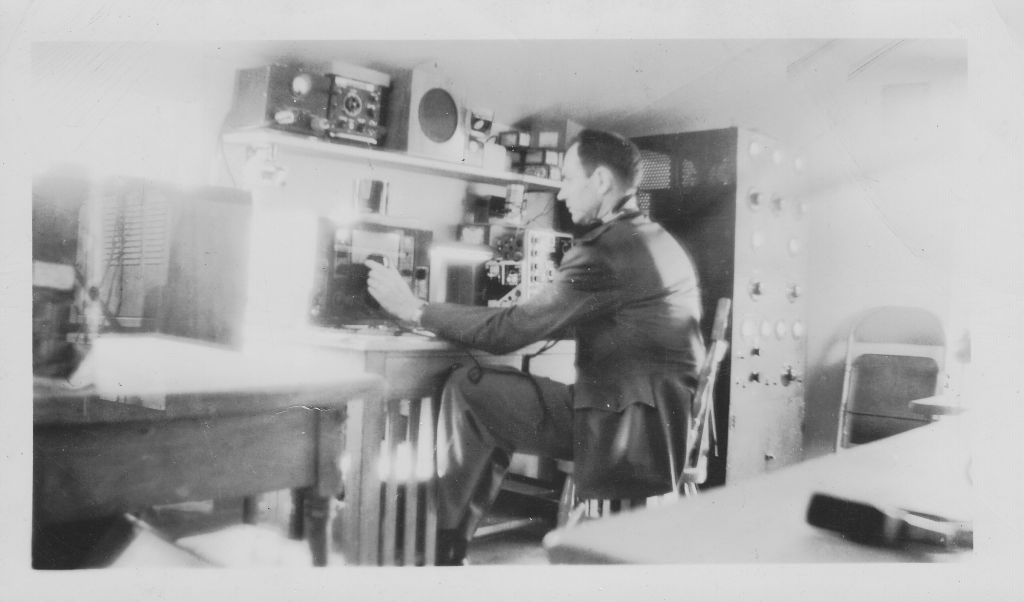
CW: Interested in QRQ (high speed) CW on the air or over the internet? Check out AA0HW's "QRQcw" site...go here. Take a look at Chuck's video on setting up the software program called "rufzWORDS" (3000 Most Commonly Used Words in the United States) to help increase your speed and accuracy of copying common words. I am a member of the First Class Operators Club, FOC #1916 and CWops, #271. I have been a long time member of the CFO, #023 and enjoy QRQ rag chew QSOs using my N0SA paddles and various keyboards. My dad (W4BI - SK) was a WW2 Intercept Operator, Instructor and Member of the On-The-Roof-Gang (OTRG) Class of 1935. QRQ CW has always been a big part of my ham activity. Listen in for practice on 7.017 @7:45 EDT/6:45 CDT (+/- QRM and contests may require freq changes) Saturdays and 8:45 EDT/&:45 EDT on Sundays. Steve WF3T usually gets the gang going. Several CFO ops in the group and all great operators. If you are copying well, please join in!
CWops Club! - I'm a Member (#271) Lots of fun, activity and informative monthly newsletter. Want to learn CW or improve your efficiency? Checkout the them out at the web site here.
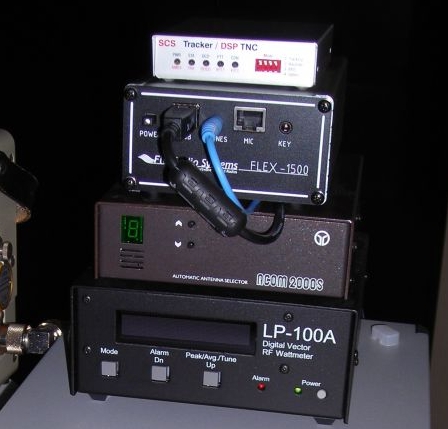
HF Packet Radio - SCS (Special Communications Systems) has a Packet Radio modem called the SCS Tracker / DSP TNC which works well in its 200/600 baud "HF Robust-Packet" mode. I use mine with the Flex 5000A. A very small enclosure makes it ideal for mobile or portable operations as a "Tracker" also. Take a look at it here. Available in US from the hams at Farallon Electronics in California. Go to Robust-Packet.net for interesting tracking activities on land and sea. An updated version of the SCS Tracker/DSP TNC is now available which can be see at the Farallon web site.
DRM (Digital Radio Mondiale) listening in the USA:
Despite the loss of many SWL stations and sometimes poor propagation, DRM stations can still be decoded here in the USA. Check the DRM schedule for times and frequencies. DRM can provide a near high fidelity FM experience on shortwave! If you have never experienced this, it may be hard for you to believe a "Shortwave station?" can sound so good! "Dream" software is open source and easy to set up especially with SDR radios. Some listeners are using remote DMR receivers (KiwiSDRs via internet) located in several countries. The DRM schedule frequently updated.
DRM News:
All India Radio has installed new DRM transmitters (100 to 300KW+) throughout the country. Despite the downturn in SW radio, DRM may still have a chance in several countries through out the world. India has gone all digital using DRM including their automobiles. DRM would be a good replacement for US's medium wave band. Our "AM" is mostly a waste land of noise and evening QRM. DRM is much more efficient, noise free, high quality audio. It could save broadcasters a lot of $$ on their electricity bills! To keep up to date on DRM, check out check out K6FIB blog found here. (and don't confuse this with Motorola's DMR or Microsoft's Digital Management Rights :-))
Check out the videos here: www.youtube.com/watch?v=ttJ1aCDTAVI compare with analog here: www.youtube.com/watch?v=IL7XCbs3QO8
One week of DRM listening provides good results: In early Nov 2010, I spent 7 days listening for DRM stations world wide. Using a Flex 3000 ham transceiver and a Force 12 multi-band Yagi, I found there is a number of stations with good signals for receivers in the USA . Signals SNR ranged from 15 to 33dB providing good decoding. Who had the best signal? TDP Radio was the winner. RCI was a close second. Both in the low 30s dB SNR. RNZI has good "talk radio" shows and interesting stories. Disco Palace and REE Noblejas (Costa Rica) both have great music. TDP Radio's dance music will thump your bass speakers quite well. All we need now is another Solar Cycle 19! Today (2023), most of these DRM are now silent. Check the DRM schedule for new stations currently on the air. DRM radios are finally on the market. Check Fibber K6FIB blog for reviews on them.
DRM audio (sound byte)
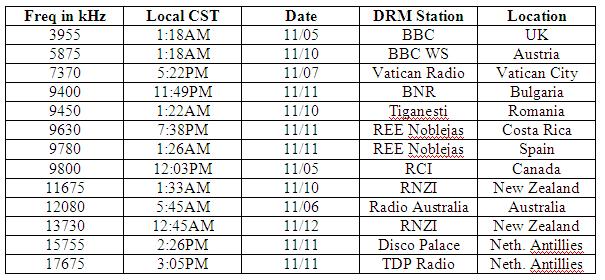
-----------
ARRL Considerate Operator's Frequency Guide: Digital Voice has been recognized for its popularity and is now shown in this guide. Also, Digital-SSTV frequencies were added to the list. Thanks to QST editor, Steve Ford, WB8IMY for his help with these additions to the guide. The list was published once a year in QST and on the ARRL web site here. Since Steve left, however, it has not been published.
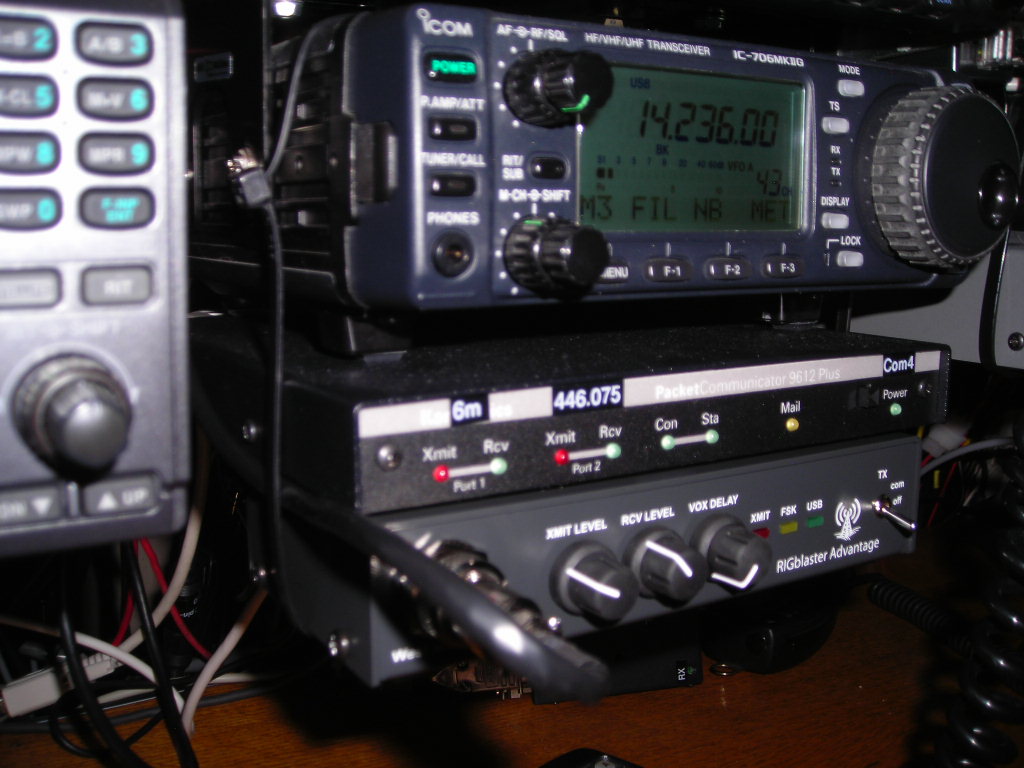
RIGBlaster Advantage from West Mountain Radio: Recently, I set up a second HF station using the ICOM 706Mk2G and the USB RIGblaster Advantage specifically to see how it performs with FreeDV. In one word "great..." Rig control (PTT) may use either serial com port (via the USB port connected to the PC) or VOX. Both perform well and no latency issues noted using VOX. Look for more on the setup and audio performance in the forthcoming spring 2014 issue of the West Mountain Radio newsletter.
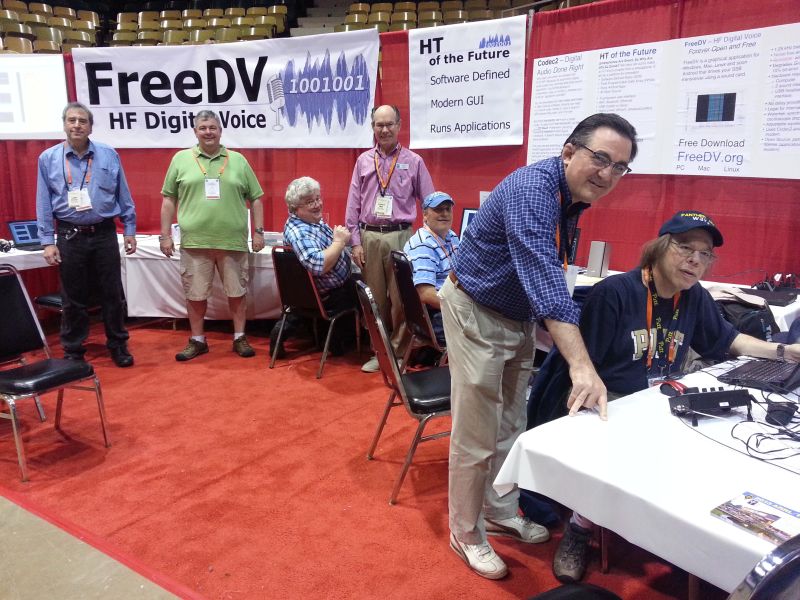
FreeDV booth at the 2013 Hamvention: Bruce, K6BP put together a volunteer team that presented FreeDV, CODEC2 and HT of the Future in a large booth in the main arena. The volunteers were quite busy answering questions and demonstrating FreeDV. Two HF stations were set up within the booth and a remote HF N4DV (now SK in 2023) station was making contacts across the US. The booth and volunteers may be seen here.
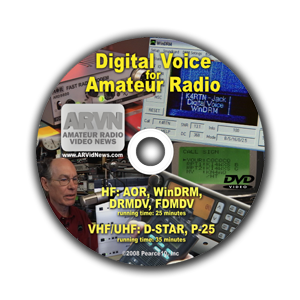
For more on Digital voice, check here. DVD is now available on youtube.
WinDRM Legacy HB9TLK's WinDRM's DV and Image/Data Transfer: (sound bite)*
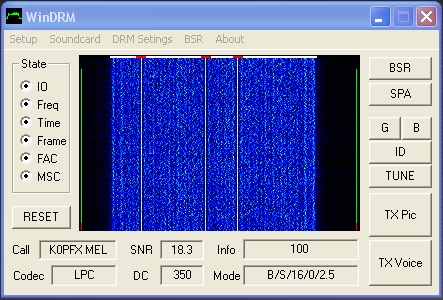
Latest release for WinDRM is dated 23-July-2008. For compatibility with EasyPal's image transfer using Reed-Solomon encoding/decoding, refer to Dave, KB4YZ's excellent doc on downloading and setting up the encoder/decoder for WinDRM go here. Digital Radio Mondiale's WinDRM docs Release 1.3, Quick Setup Guide and software may be downloaded from the www.n1su.com website. This is an "enhanced" sound bite showing the capability of WinDRM. Recorded in a QSO between St Louis and NY with special EQ techniques. Some activity using EasyPal has come back in 2023/24. Look for it 14.233. Look for a multiple carrier signal in your receiver's waterfall (similar to the one abovein WinDRM).
Note: This mode has been superseded for HF voice by FreeDV in 2019 however, it is still available and has enhanced capabilities for Data transfers that may not be found in other HF modes.
3cm 10GHz Portable operation:
A 10gHz portable microwave station was completed utilizing a FT-817D for the "I.F." and a DEMI transverter running about 2.5w. A club was formed in 2009 in the St Louis area called "SLAMS" and several of us are exploring the world above 1GHz. It is pretty amazing what can be done on this band... its more than just "LOS" (line of sight). One member, WB9PNU worked 160+ miles using his SLAMS 10Ghz portable on a camera tri-pod from his driveway. "Rain scatter" contacts are possible over hundreds of miles. SLAMS has a monthly breakfast at the Maryland Height's (270 & Dorsett) Denny's (see link for SLAMS for date/time). If your interested in Microwaves and above, please join us.
Microwave 10GHz portable docs:
Documenting the work on a 10GHz portable following the "SLAMS Standard" design was published in the 2013 Microwave Update (MUD) proceedings. SLAMS is the St Louis Amateur Microwave Society and their activities may be seen here. The paper submitted by K0PFX provides the average builder detailed information on parts procurement and construction of a 2.5w portable 10GHz microwave station.
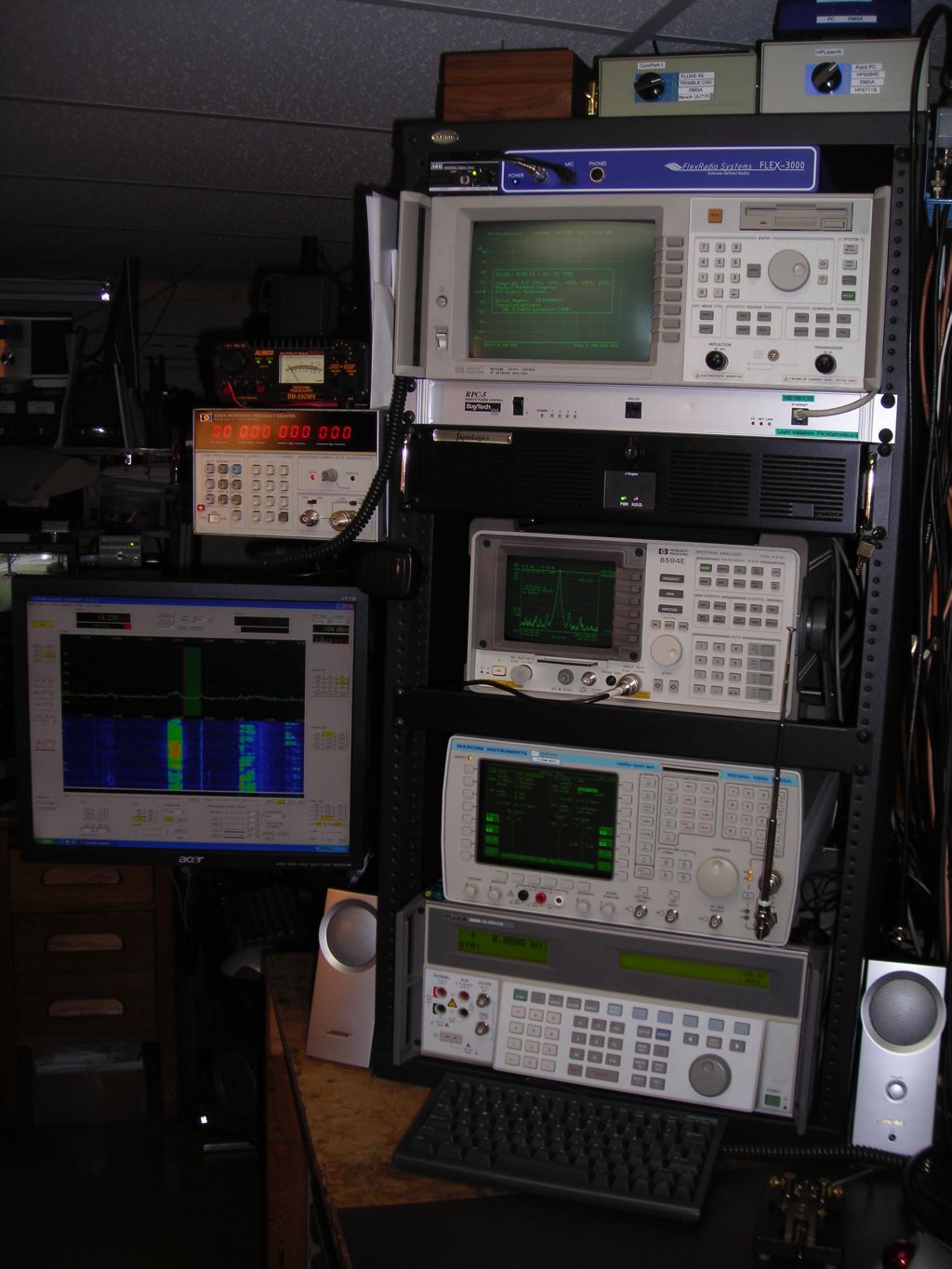
On the Bench: I have finally completed my second test stand. I have the Marconi 2965A that spent 4 months in the UK being repaired and calibrated! Marconi made some very nice gear (they are now part of Aeroflex which I think has been bought out also?) but repairs can be take a long time and may become very costly.
Software Defined Radio:
Flex 6700: Having started with the "3-Board Set" as described in QEX many years ago, I continue to be excited about all the innovation that Flex has brought into ham radios through their SDR designs. The 6700 is no exception with its excellent sensitive and very selective receiver with low transmit IMD products. I am currently waiting on the new version 3 of Flex's Maestro Control Console. It has a ship date of May 2024.
Other interests:
Surface mount (SMD) assembly and repair. Test and measurement equipment calibration. I fully retired in 2020 and closed my consulting firm. 52 years in the telcom theatre was enough. I have a music background in piano and organ (I sold my Thomas Theatre organ and looking for Hammond B3. Still have a Leslie tone cabinet once used on the Lawrence Welk Show)... that should date me.
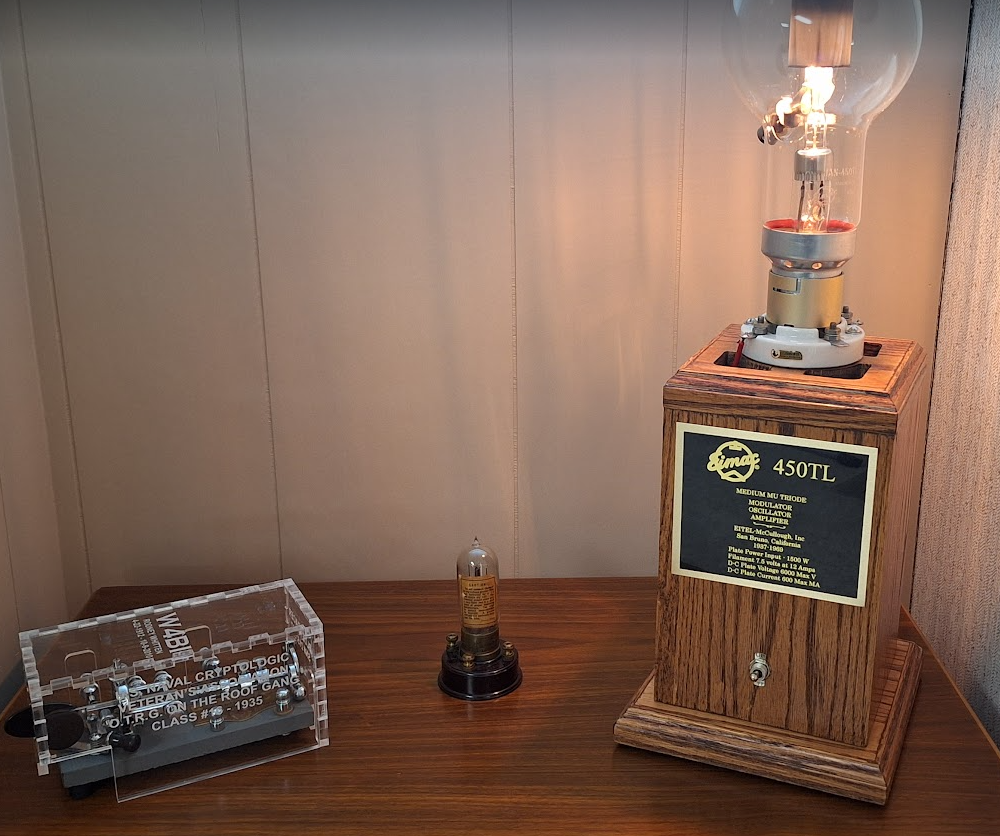
Wood working and lamps.. Here is one for my Eimac 450TL.
Filament transformer (7.5V at 12A) and a small fan is located in the base.
The small tube was an "experimental" detector from an Atwater Kent then located in Philadelphia.
The Vibroplex bug was my Dad's W4BI now SK.
Tower, antennas and station at K0PFX
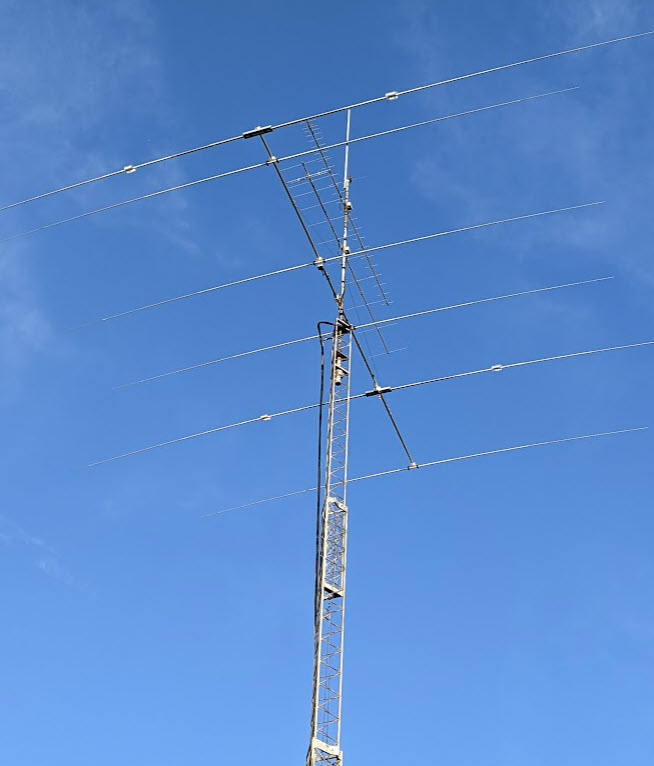
72 ft US Tower, JK Antenna Falcon 4el on 20 and 2 el on 40, K1FO Yagis 144/430, Comet CX333 Vertical
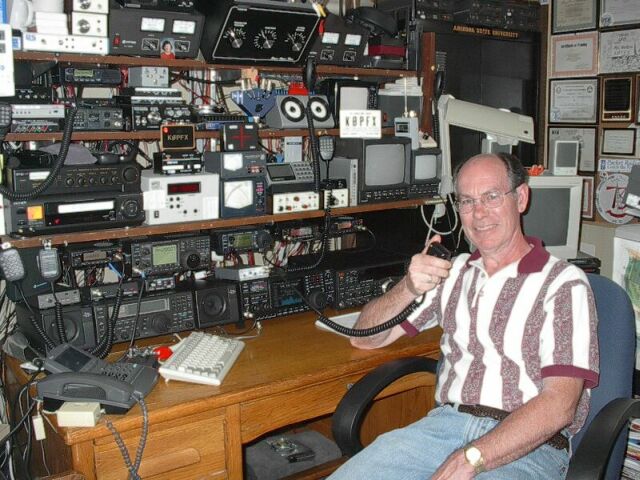
"As seen in..." QST Dec 2004 thru May 2005 QST.
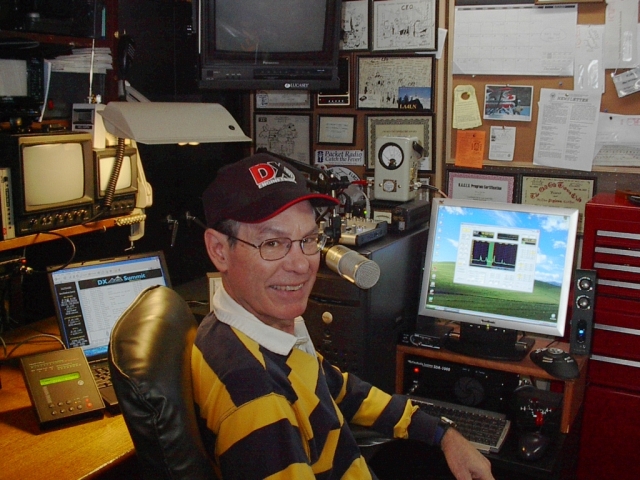
Early...FlexRadio SDR-1000 + ACOM2000A + AOR ARD9000 + PR40 = Software Defined Fun...
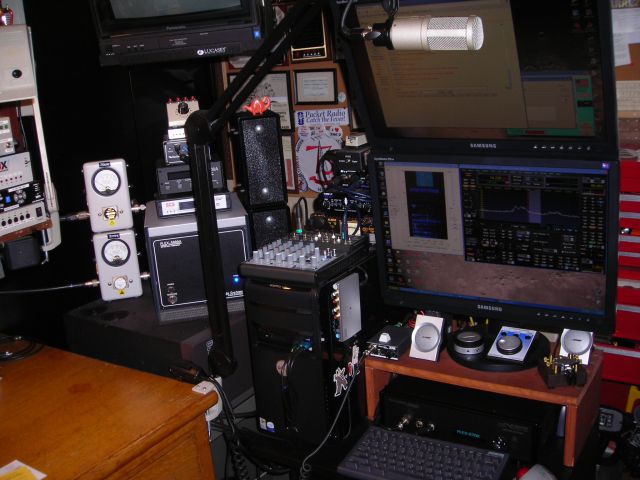
Current...FLEX 5000/6700, Heil PR40, SCS Tracker/DSP TNC, LP-100A, ACOM 2000A
Copyright © 2009, 2010, 2011, 2012, 2013, 2014, 2015, 2016, 2017, 2018, 2019,2020, 2021,2022,2023,2024 Mel Whitten